All cases Concept validation

One platform, two audiences: journalists and readers.

Unpress, an Austin-based company, wanted to build a platform for independent journalism in an era of fake news and media monopolies. It had to serve journalists and also appeal to a broad audience.

Company
USA
Role
Independent UX Researcher, end to end
Period
2021 – 2022
Methods
Interviews, mobile usability tests, journey mapping

Context

Unpress, based in Austin, Texas, wanted a platform that promoted independent journalism. The challenge was to balance what professional journalists need with what interests the general public, while validating a new concept in the news industry.

Over two months, I ran the research end to end with 20 journalists and news readers in North America.

Research question: does the concept make sense for independent journalists and for news readers, and what needs to change before launch?

Approach

The main audience, independent journalists in North America, was hard to reach.
Niche recruiting Independent journalists and readers, through User Interviews: 10 men and 10 women, ages 18 to 55, online several times a day and reading news at least once a day.
In-depth interviews With journalists and readers, about how they consume news and what value they saw in the product.
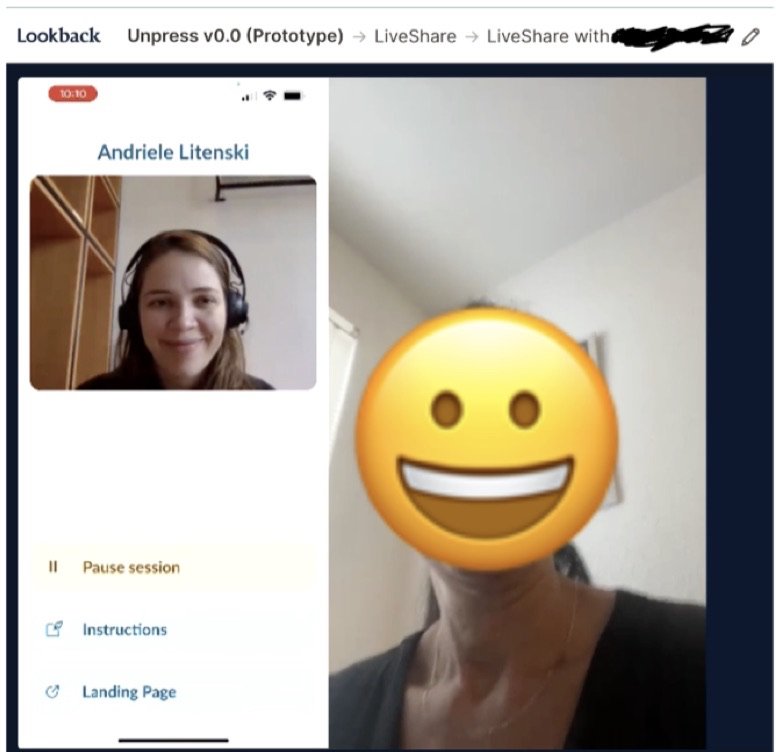
Moderated mobile usability tests Run remotely with Lookback, to explore and validate the concept with both groups.
Journey and emotion map For each step of the experience, showing where people felt confused, neutral or positive.
Lookback screen during a remote test: the researcher on the left and the participant on the right, with their face covered.
A remote moderated mobile test with Lookback. The participant’s face and name are hidden.

Findings

01

Independent journalists have their own needs.

To create and distribute content, they need different things than readers do.

02

Journalists and readers saw value in the platform.

Overall perception of value was positive in both groups.

03

Some icons and flows needed to change.

On several screens, people felt confused or neutral. That guided the next design iteration.
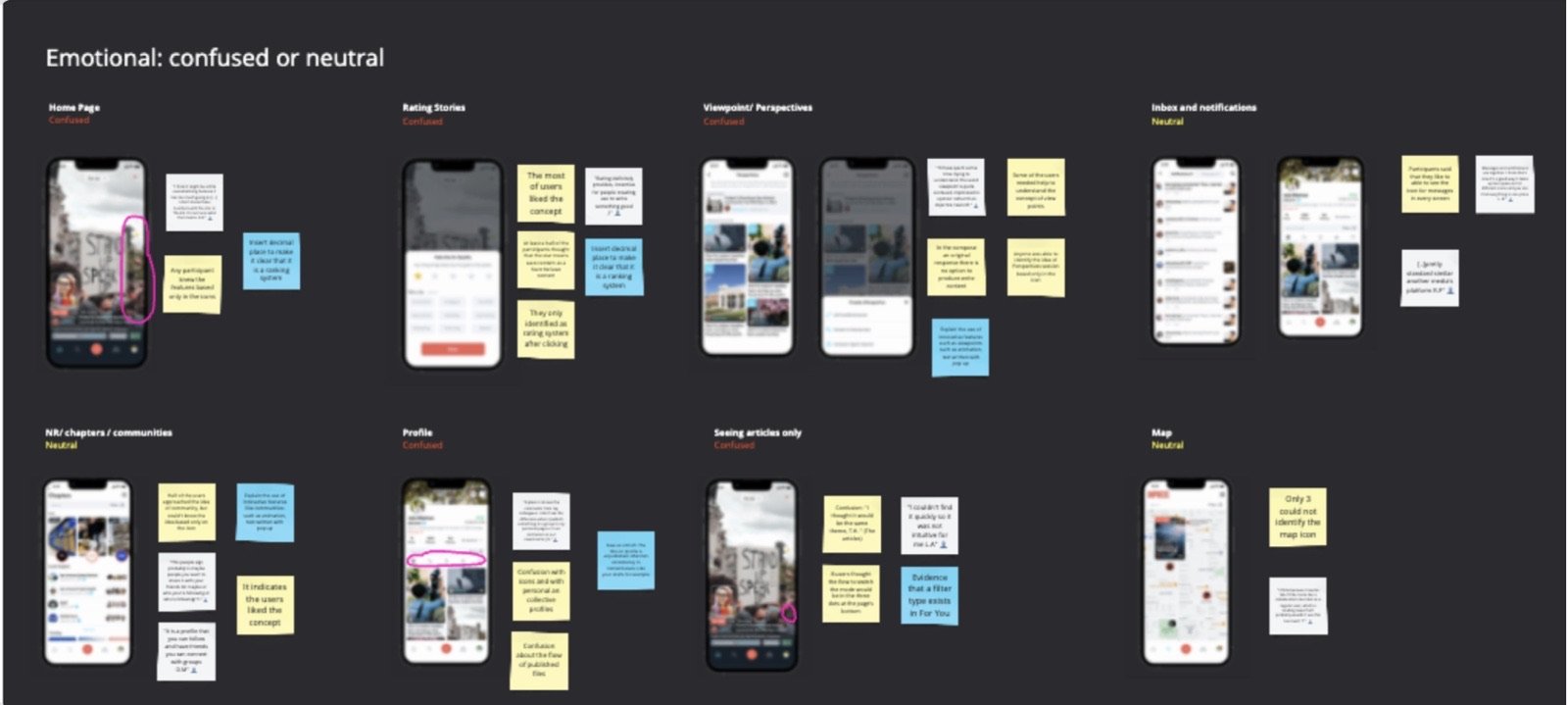
Synthesis board with prototype screens grouped by emotion, each with sticky notes of participant comments.
Synthesis: screens grouped by how users felt (confused or neutral), with their comments.

Outcome

The research directly shaped the development and launch of the platform, which secured two rounds of investment.

Some details have been simplified for confidentiality.

Next case

What makes a feed “good”?